

Sapropel «BioSaproGerm»
Soil improver for organic farming
Increases productivity, accelerates maturation
Restores soil fertility
Inhibits the growth of pathogenic nematodes
Increases soil
moisture capacity
Prevents erosion
Cleans the soil from harmful microorganisms and fungi
What is «sapropel»?
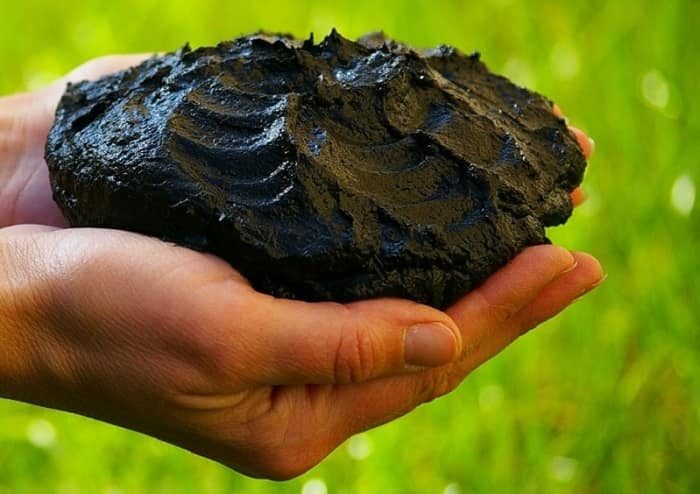
This is an organic, soil-forming fertilizer obtained using an environmentally friendly, patented technology from natural ingredients: peat and sapropel colloid. The combination of these two components perfectly complements each other and gives excellent results.
The uniqueness of the properties of sapropel is due to its ecological purity and rich organo-mineral composition
Sapropels are centuries-old silty bottom sediments of freshwater reservoirs formed as a result of physico-mechanical, biochemical microbiological processes from the remains of plant and animal organisms inhabiting the lake, as well as from inorganic components of biogenic origin and mineral impurities of a permeable nature. The high water retention and low filtration capacity of sapropel contribute to the improvement of the water-physical properties of light soils. With its adhesive ability, sapropel, when interacting with the soil, improves its structure, gives it clumpiness, friability, and increases air permeability. The introduction of sapropels into the soil is not only a means of directly providing cultivated plants with nutrients, but also a very important factor in radically improving fertility by enriching the soil with organic substances, reducing acidity and improving the water-physical properties of the arable layer, which ultimately leads to an increase in crop yields.
Get up to 3 times more profit
Get economic benefits by improving the quality of the product, increasing yields and prolonged action of sapropel, as well as the opportunity to create a new line of environmentally friendly organic products
Project «Green Earth»
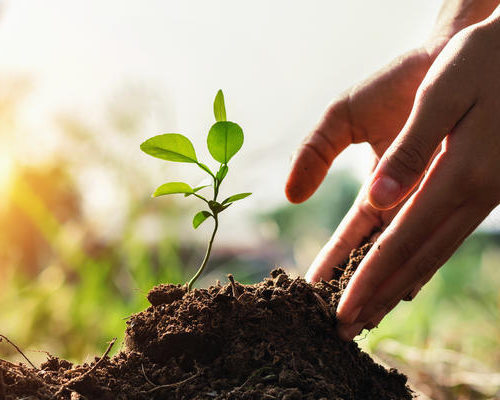
The goal of the Project «Green Earth» is to create the largest production in the Russian Federation for the production of mineral organic fertilizers from natural organic materials with increased biological activity based on its own unique technologies «BioSaproGerm». These fertilizers will be used to restore soil covers subject to degradation of varying complexity, to prevent the spread of desert zones, to support forests and green spaces, for greening steppe zones, to strengthen urban and special landscapes, use in crop production, etc.
LLC "Alliance Plaza" is a Russian participant in the international group PWST, the countries of Europe, Indo-China and the Asian region, existing for more than 10 years, is a participant in the project "Green Earth". The Russian group, within the framework of the project, plans phased investments in the territory of the Russian Federation.
The deterioration of the current ecological situation on earth, such as massive deforestation, soil erosion, an increase in the area of deserts and steppes, local and global environmental disasters, an increase in population, a decrease in agricultural areas, etc. poses a threat to our civilization as a whole. Yesterday, the earth was threatened by Ebola, today Covid-19, all this may be a harbinger of the fact that TOMORROW, due to the further sharp deterioration of the environmental situation, even more serious challenges for humanity may occur.
Our new, innovative technologies used in agriculture and environmental fields are able to create new, significant improvements for the ecological situation on earth. The products of our corporation will be used both in the Russian Federation and abroad.
Practical examples illustrate how our fertilizers can revolutionize effective, sustainable and economical soil restoration and measures to combat desertification in the Russian Federation and around the world. Our fertilizers in various forms are active natural long-term donors of nutrients for plants and organisms of fields, meadows, forests, rivers, lakes and oceans. They contain different ingredients depending on the target group of plants.
The peculiarity of fertilizers is that it concentrates moisture, due to this it retains water, after sunset the air cools down, which means that it can no longer store enough moisture. The dew point is reached above a certain temperature, so that moisture is concentrated in our fertilizers. Progressive desertification (Sahel syndrome) describes the deterioration of soil conditions in relatively dry (arid, semi-arid and dry sub-humid) areas, which is caused by various factors such as climate change and human activity.
Creating jobs with the help of innovative technologies "Green Earth" in the field of regeneration and innovative fertilization of soils, this requires a large number of qualified employees in the new environmentally oriented company "Alliance Plaza" LLC. Our technologies will create the latest technological jobs in various sectors of industry, ecology and agriculture. The most important elements of human existence – food, water, clean air and healthy soil, all these areas are in the program "Green Earth".
Cleaning and regeneration of ecosystems ruthlessly destroyed by humans is the main priority of humanity, it is guaranteed to prioritize the needs of clean water, clean air and clean land. These priorities are currently in the first place in the world, many countries adopt state programs for the conservation of land and water resources and air purification, which guarantees future generations the opportunity for normal living conditions.
Currently, presentation materials have been developed, specifications for organic fertilizers have been obtained "BioSaproGerm", a business plan has been developed to create a multidisciplinary enterprise in the Moscow region - the production of ecological agricultural products based on natural organic materials.
Due to the high demand for ecological agricultural products in the world, as a result of the implementation of this Project "Green Land" it will be necessary to involve qualified personnel in the Stupinsky urban settlement, as a result, the number of about 300 jobs will increase.
PWST– Geography of Motivation orientation - Founder, international team.
PWST PFT team - cooperation and joint patenting of BioSaproGerm biocapsule technology, as well as PST participation in the production and sale of biocapsules/fertilizers for both soils and animal feed.
In this environmental project "BioSaproGerm", founders and inventors, scientists, the team PWST PWFT consists of chemists, engineers, managers with international experience, practitioners, economists from Russia, Germany, Italy, Austria, India and South Korea.
Products«BioSaproGerm» of Alliance Plaza LLC company participation in organic company and R&D, production of organic fertilizers and soil improvers using natural, non-genetically modified bacterial strains. The use of various strains of Azotobacter, Azospirillum Lipoferum and other bacteria that convert nitrogen from the air and make it available to plants. Avoiding artificial fertilizers and nitrates in the soil. Strengthening of the bacterial immune system is achieved through the use of Swiss technology Penergetic.
PWST Representative offices PWFT
International sales network
Werner E. Schubert
CEO (NRW) - Germany
Sales and marketing manager with professional experience in the field of consumer and industrial durable goods and financial services. Career in two American and one European multinational companies in Frankfurt and Cologne and in Athens, responsible for the Middle East and South Asia. For twenty years he worked as a manager in head offices in London, Amsterdam and Turin. Founder of West-East GmbH and initiator and project manager of the Dolphin Project of the European Commission in Central Asia, TACIS; "New Silk Road". From 1993 to 1997 he worked at Henley Management College, Henley-on-Thames, UK. Topic: "Transport corridor Europe.
Caucasus-Asia - The New Silk Road " - Preparation of marketing research in Central Asia - Henley Center for Automotive Management.
Alexander Shtulberg
Technical Director (NRW) - Russia/Germany
Inventor and developer of water technologies with many years of experience in mineralogy and liturgy. He is an electrician by education. Knowledge of mineral deposits important for the production of sorbents, from the Urals to Kamchatka in the Far East of the Russian Federation.
Expert and consultant on natural minerals in terms of their suitability and chemical and physical properties for water purification and quality assessment. Advisor to universities and municipal water supply stations, industry and agriculture on sustainable removal of pollutants in extreme situations of water pollution.
R&D, production and activation of sorbents, design of production facilities for sorbents and building materials. Construction of sewage treatment plants for the home, agriculture and industry.
The first success was the design and installation of a water recycling plant for the regeneration of precious metals and rare earth elements in the Ural region, which is still in operation.
The relation to mineralogy has a family origin. The family has worked in this field for four generations and participated in their own companies.
Josef Frumann
Director of Bio Energetic - Austria
Sales specialist is an experienced founder in the field of development and management of international trade networks in Europe for agricultural needs - feed, fertilizers, pesticides, insecticides. A reversal after the increasingly obvious environmental damage from industrial agriculture and climate change. In 2003, the company "Bioenergy" was founded in Austria. The same customers, but environmentally friendly products and services aimed at solving the main problems. Example: "Bee death and insufficient pollination"; -bioenergy supports farmers by providing "just-in-time on-site" bumblebee colonies.
Distribution of PWST PWFT products and systems in Austria and neighboring countries through bioenergy.
Giuseppe Cervo
Partner and Board member of several international companies - Italy, Rome
Experienced electronics engineer who held difficult positions
general manager, partner and board member of several international companies. Knowledge of the Italian, African and South American markets with special attention to Brazil and Argentina.
Participation in research and development, production of organic fertilizers and soil improvement products using natural, non-genetically modified bacterial strains. The use of various nitrogen bacteria, Azospirillum Lipoferum and other bacterial strains that convert nitrogen in the air and make it available to plants.
Boris Yagudaev
Director of Alliance Plaza - Russia/Israel
He is the Managing Director and founder of LLC "Alliance Plaza"& Alliance Plaza LLC - development and implementation of international projects.
Desalination of seawater.
At the beginning of 1999, there was a shortage of water in Israel - the water level in Lake Kinneret fell by 4 meters. This was the beginning of the application of seawater desalination technologies using the reverse osmosis system in Israel. Boris Yagudaev took part in the development and creation of experimental equipment, which was tested in Israel, and then as a project manager for the introduction of technology in Israel.
During this period, he was one of the leaders of a similar project in the Russian Federation on the Caspian Lake in the city of Shevchenko in the Republic of Kazakhstan.
Alliance Plaza LLC in cooperation with West-East GmbH has been in development with PWST /PST since 2007.
To date, Alliance Plaza LLC has been working with Alex Shtulbergu and Professor Sergey Kolomiets since 2010 on the production of biocapsules "BioSaproGerm" organic fertilizers, both for soils and animal feed based on Sapropel.
The company Alliance Plaza LLC is a production and marketing company of Biocapsules and Biofertilizers by joint agreement and with the participation of PST GmbH & Co KG - West-East GmbH.
Sergey Kolomiets
Professor of Biological Sciences - Russia
Doctor of Biological Sciences, Head of the Feeding and Feed Production Department of the Moscow Academy, for Veterinary Medicine and Biotechnology.
MBA. According to the results of scientific research, In 2000 he defended his thesis on the topic: "Physiological characteristics of lipid metabolism of young animals in conditions of limited nutrition".
Later he continued his scientific research in the following topics: "The action of microtoxin sorbents. according to the hygienic properties of the Feed, the resistance of animals". He has published more than 50 scientific papers and patented inventions. More than 15 of his textbooks have been published. He has been working since 2011 with the development and implementation of products for organic farming and animal husbandry. And scientific research is the investigation and development of natural resources, sediments, microalgae and macroalgae to create an environment free of microtoxins and other toxic substances mainly of anthropogenic origin. In 2017, he successfully defended his doctoral dissertation in the specialty - veterinary hygiene, Ecology, animal hygiene, as well as veterinary medicine and Hygiene Testing. Since 2007, cooperation and development with PWST Alexandr Stuhlberg and Alliance Plaza, CEO Boris Yagudaev, for the production of Organic capsules and organic fertilizers Base Sapropel.
Member of the Russian Commission under the Ministry of Agriculture of the Russian Federation on environmental protection.
Chang Woo Lee
Doctor - South Korea
Dr. Chang Woo Lee is the head of Wintell Buredeco Korea Ltd and a visiting lecturer at Seoul University for a PhD in marketing and strategy.
Wintell Buredeco Korea Ltd advises the Ministries of Korea, China, Vietnam, Indonesia and Mongolia on industrial, energy and environmental issues. It has its own structure in China.
European experience and studies at Henley Management College, Henley-on-Thames, UK.
Surendra Kamat
Bangalore, India
He is the Managing Director and Founder of SANSHIN DEVICES PVT LTD, Bangalore, India. He holds a degree in law and management and has over 40 years of experience in various fields of management, marketing and consulting. He worked in electronics for two decades. Practical experience of applying a unique energy concept/product from Switzerland in the field of agriculture, water and animal health "Penergetic International AG". Contributed to conducting tests with agricultural research institutes.
Chances and risks development of water technologies
Groundwater modeling, created within the framework of international cooperation, describes the delayed occurrence of the effects of climate change on global groundwater recovery as an "ecological time bomb". In the next hundred years, only about half of the world's groundwater resources can be in equilibrium. In the other half, even extreme precipitation could no longer fill reservoirs (aquifers) on average due to the accumulation of dry periods.
According to research by Bank of America Merrill Lynch, global water consumption in 2005 should more than double by 2030 with the growth of the world's population and uncontrolled economic growth.
The Middle East and North Africa are currently the regions with the most pronounced water shortage. In Europe, too, there are the first signs of a shortage of drinking water, for example, in Italy and Spain. This deficit is expected to spread to Pakistan, southern Africa and most of India and China in the next 25 years. In the USA, hydraulic fracturing of oil and gas requires increasing volumes of groundwater, which are highly polluted and carcinogenic as a result of the extraction process.
In other countries, such as the EU, nitrate concentrations in groundwater are often too high. Pollutants in water include pesticides, various chemically complex fertilizers, and the heavy metals they contain, such as cadmium or arsenic. The latter are dangerous, since they are not excreted from the body and do not accumulate in it for a long time. Most chemicals are difficult to remove with conventional water treatment.
Advantages sapropel «BioSaproGerm»
Better than manure and compost
does not contain a stock of weed seeds;
not infected with pathogenic bacteria and flora;
does not have an unpleasant smell.
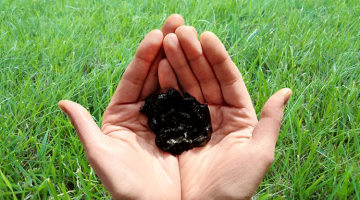
More effective than peat
contains a lot of organic and mineral substances that are very important for plants;
effective when used in pure form (without the addition of other fertilizers).
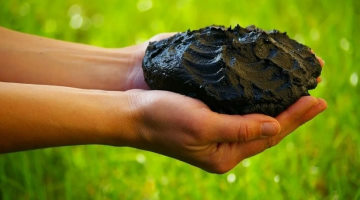
More useful than mineral fertilizers
has no harmful toxic effect on humans and animals;
reduces the content of nitrates, nitrites, salts, heavy metals in the soil;
harmless to the soil in any dose.
Comparison with other fertilizers
| Sapropel | Mineral fertilizers | Fertilizers based on animal waste (manure) | |
| Creating humus | Ok |
Not |
Ok |
| Watering frequency | Twice as often | Standard | Standard |
| Validity period | From 3 to 5 years | 6 months | 12 months |
| Increased immunity (action of humic and folic acids) | Ok |
Not |
Not detected |
| Increasing the shelf life of the crop | Ok |
Not |
Not detected |
| Presence of weed seeds | Missing | Missing | Present |
| The presence of an environment for the development of pathogenic bacteria | Missing | Missing | Present |
| Purification of soil from toxic substances | Ok |
Not |
Not |
Application results
Increase in yield and acceleration of crop maturation
The moisture capacity of the soil increases, as a result, less watering is required
Validity period,
until re-use
Increases the vitamin content in foods and improves the taste qualities
How and when apply sapropel?
February - AprilSeedlings
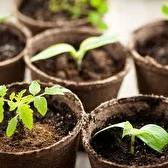 To grow seedlings, make a soil from sapropel and earth in a ratio of 1:3
MayLanding
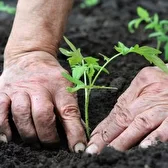 When planting flower seedlings, tomatoes, peppers, cucumbers, eggplant, potatoes, etc. in the open ground, add 1 cup of sapropel (200-250 ml.) to each well.
When sowing flowers, lawn or small–seeded crops - carrots, beets, parsley, etc., dig up sapropel with soil to a depth of 10 cm. in the ratio of 3 liters per 1 m²
When planting fruit and berry crops (apple, pear, plum, currant, raspberry, cherry, peach, apricot, grape), mix sapropel with soil in a ratio of 1:3-1:6 and fill this soil into the planting pit
When planting and transplanting home flowers, mix sapropel with soil in a ratio of 1:3 - 1:4
June - AugustTop dressing
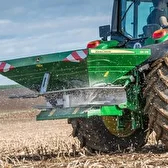 For fertilizing any kind of plants, sprinkle sapropel around the plant or between the rows (a mulching layer of about 2 cm, for trees – 5-7 cm), loosen the soil a little and pour abundantly
September - OctoberDigging! THE MOST IMPORTANT STAGE
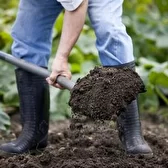 In autumn, after harvesting, dig up sapropel with soil at the rate of 2-3 liters per 1 m²
Get a special offer
for a trial batch of our products
We will analyze your soil and crops and tell you how to achieve the best result.
Feel the advantages of the application and the savings right now.
How we extract and produce sapropel
The technology of sapropel production "BioSaproGerm" is unique, the fertilizer is completely natural and 100% organic
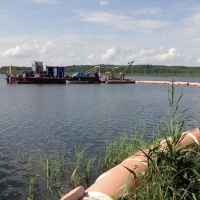
Extraction
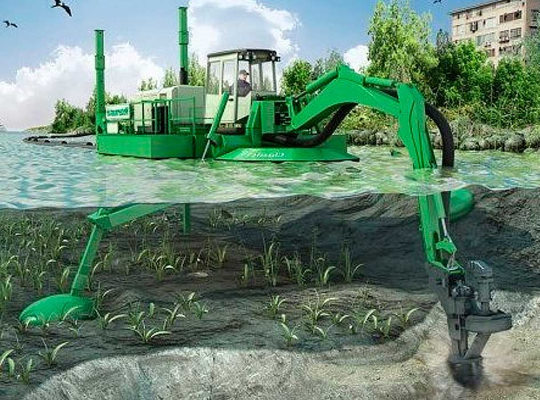
Extraction of sapropel into an intermediate storage hopper
Preparation
Supply of sapropel of natural humidity 85-97% to the conveyor
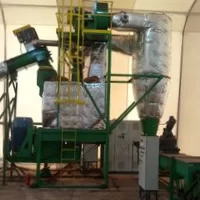
Mixing
Preparation of peat and subsequent mixing with sapropel
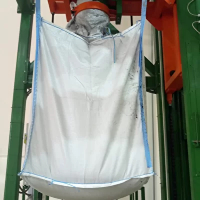
Packing
Packaging of sapropel "BioSaproGerm" takes place in a continuous cycle
Answers to popular questions
You can make it at the rate of 2-3 liters per 1 square meter. It is more economical to apply directly under the root, say under strawberry bushes, scattering granules in the trunk circle. It is better to do this in wet weather. After application, loosen the ground and pour.
For application during planting (in the hole), the fertilizer is mixed with the soil in a ratio of 1:3 or 1:6. That is, 1 liter of fertilizer can be applied to a small plant by mixing it with 3 liters of soil. The landing hole is filled with this mixture. Under a fruit tree, you can add up to 10 liters of fertilizer to the planting pit, and such refueling lasts for 5 years.
* gray-earth
* chernozem
* clay
* loamy
* sandy
* sandy loam
* etc
* grain
* oilseeds
* vegetable
* fruit and berry
* decorative
* etc.
* Nitrogen; Phosphorus; Potassium
* nitrogen-forming and nitro-fixing bacteria;
* natural water-soluble vitamins: carotene (provitamin A), B1, B2, B3, B5, B6,"12, E, C, D, P and folic acid;
* 16 natural water-soluble amino acids: Histidine, Glutamic Acid, Glycine, Valine, Arginine, Aspartic Acid, Alanine, Serine, Leucine, Isoleucine, Phenylalanine, Tyrosine, Lysine, Methionine, Threonine, Cystine;
* natural enzymes: catalases, peroxidases, reductases, proteases;
* humic complex: humic and fulvic acids;
* Trace elements: Mn, Cu, B, Zn, I, Mg, Cr, Ag, Sn, Ba, Ti, Br, Mo, V, Be;
* macronutrients: Si, Ca, Al, Fe;
* organic matter (OM) not less than 60%;
* humidity not more than 70%;
* pH no more than 8;
* does not contain artificial hormones, GMOs, pesticides, pathogenic nematodes, weed seeds, harmful pollutants and industrial waste
* within normal limits - radionuclides and heavy metals